
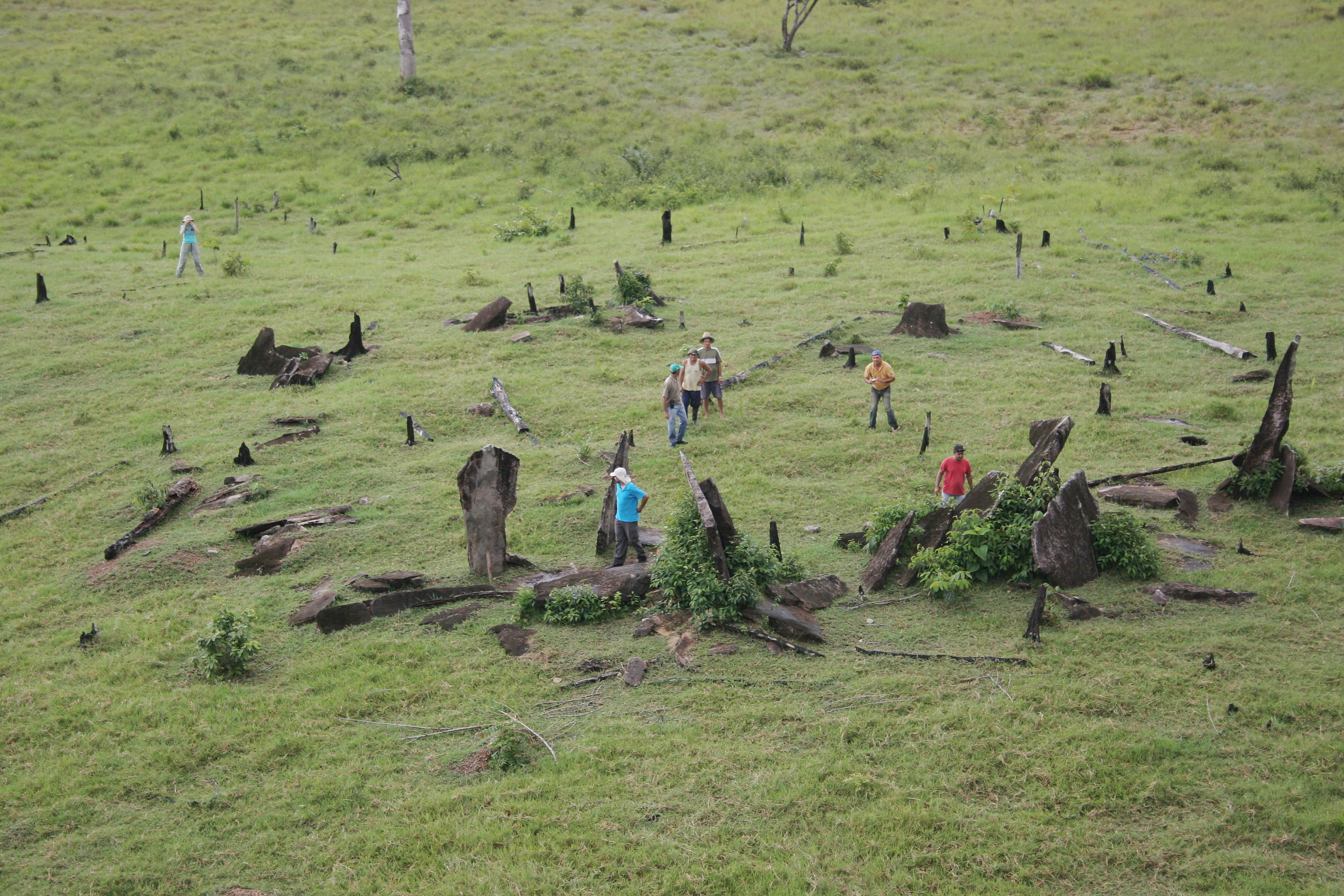
 Solstice Megalithic Monumento of Calçoene is a megalithic observatory (popularly known as the 'Brazilian Stonehenge'), located in Calçoene municipality in the Amapá state, being the largest known megalithic stone circle in Brazil, containing a megalithic stone circle of 127 granite blocks, each up to 4 m tall, standing upright in a circle over 30 m in diameter on a hilltop along the Rego Grande River.
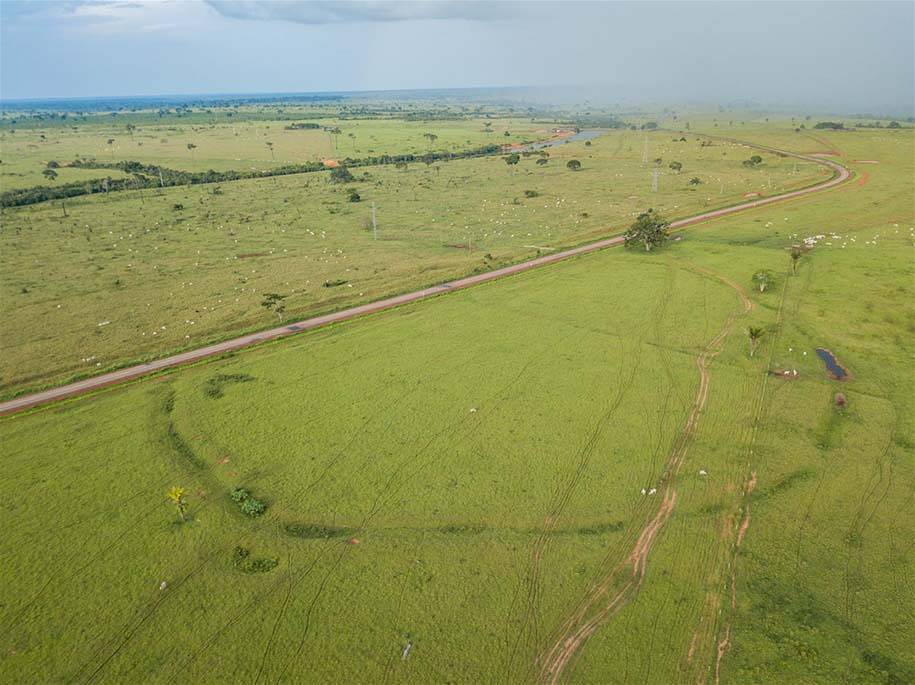 Acre/Rondonia geoglyphs are the only known occurrence of geoglyphs in Brazil, mostly located in the state of Acre and, to a lesser extent, in SW Amazonas and NW Rondônia. In the state of Acre alone, 306 geoglyph-type archaeological sites have been identified, comprising 410 earthen structures.
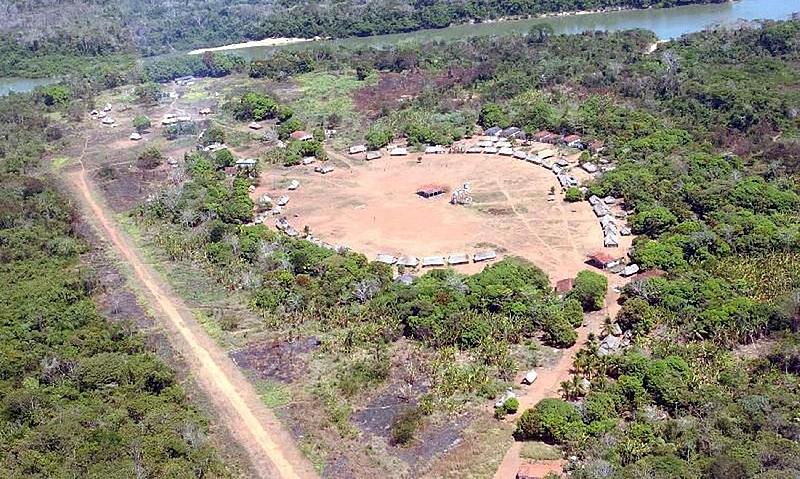 Kuhikugu is an archaeological site located in Mato Grosso state, forming a complex with 12 towns and villages over an area of around 20,000 km², where close to 50,000 people may have once lived, near Xingu River.
 Serra da Capivara Arqueological Park is a flat-mountain cliffed area with the largest and the oldest concentration of prehistoric sites in the Americas (archaeological and paleontological), with many prehistoric arts, with about 1,300 sites, of this 900 with paintings.
 Rock of Ingá is an archaeological monument consisting of a rocky terrain that has rock inscriptions carved into the rock, located in municipality of Ingá, Paraíba state. Is a gneiss formation covering 250 m², having in its main set a vertical wall 50 meters long by 3 meters high, on which several figures are carved, which suggest the representation of animals, fruits, humans and constellations such as Orion.
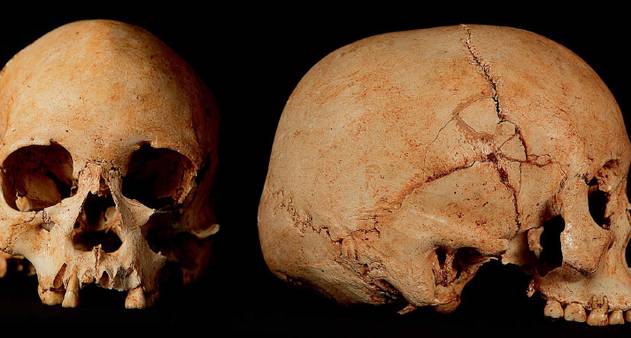 The Lagoa Santa archaeological region, in Minas Gerais (Brazil), is a site of global importance, regarded as the “cradle” of Brazilian archaeology and paleontology. It is famous for the discovery of the Luzia skull (the oldest known human fossil in the Americas) and for its hundreds of sites and caves containing rock art and fossils, investigated since the 19th century by the Danish naturalist Peter Lund, with notable areas including Sumidouro State Park and the Poções cave complex.
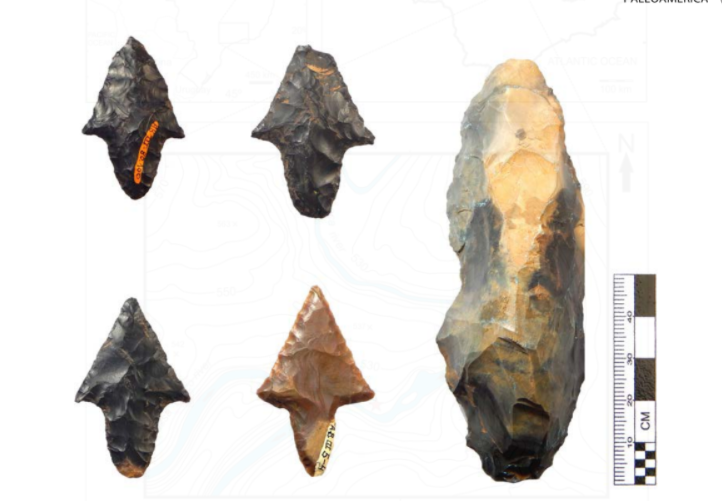 Discovered in the 1960s by a collector, the lithic archaeological site of Alice Boer, located in Rio Claro, São Paulo State, is now estimated to date to between 8,000 and 6,100 years ago, after earlier erroneous datings were invalidated.
 In 2016, researchers announced the discovery of what is believed to be the oldest record of a domesticated dog in Brazil. The finding was made in a sambaqui (an archaeological site formed by the accumulation of shells and animal remains) in the city of Pelotas.
The recent history of Brazil prior to the arrival of the Portuguese is largely focused on the arrival of Homo sapiens in the Americas in Beringia region, their dispersal, the differentiation of these populations into multiple groups, and the material traces they left behind — especially, in the Brazilian context, rock art and lithic remains. It also addresses the development of more complex and organized societies in the Amazon and the occupation of the territory as a whole by Indigenous peoples from linguistic and ethnic perspectives, as well as the absence, within the country, of large-scale civilizations (such as Aztecas in 1300 to 1521 in C Mexico, Mayas in 2000 BC – 1697 AD from S Mexico to Guatemala, and Incas in 300-1572 from Colombia to Chile) featuring writing systems, strong social hierarchies, and advanced technologies such as metalworking. All of these aspects are strongly emphasized in Almanaque Z / Ancient History of Brazil. Here, however, we will focus primarily on the period following the arrival of the Portuguese.
IPHAN
The IPHAN (Institute of National Historical and Artistic Heritage) lists 40,151 archaeological sites in Brazil (MAP | SICG/IPHAN), in all states, mainly in Rio Grande do Sul (4209) and Minas Gerais (3,278) states, with emphasis on 2,740 rock art sites (a large portion featuring rock paintings, higly centered in Serra da Capivara, Piauí state) and 50 geoglyph sites (especially in E Acre and adjacent Rondonia). A detailed search can be conducted in the National Register of Archaeological Sites (CNSA).
CABRALINE ERA
In 1500, the territory of current day Brazil had an estimated indigenous population of 7M people, mostly semi-nomadic, who subsisted on hunting, fishing, gathering, and migrant agriculture. Before the arrival of the Europeans, the boundaries between these groups and their subgroups were marked by wars that arose from differences in culture, language and moral beliefs. These wars also involved large-scale military actions on land and water, with cannibalistic rituals on prisoners of war.
On the European side, the discovery of Brazil was preceded by several treaties between Portugal and Spain, which established boundaries and divided the known world from the lands yet to be explored.
Many academics argue that the first to reach the lands of present-day Brazil was the Spanish navigator Vicente Yáñez Pinzón, who landed on January 26, 1500, at Cabo de Santo Agostinho on the southern coast of Pernambuco — considered the earliest documented voyage to Brazilian territory (G1). Another theory suggests that Pedro Álvares Cabral’s first landing may have occurred in Rio Grande do Norte rather than Porto Seguro in Bahia. This hypothesis is based on Pero Vaz de Caminha’s letter, combined with historical data on winds, ocean currents, and navigation routes. According to this view, Cabral’s first landing in Rio Grande do Norte would have been at Zumbi Beach in Rio do Fogo, and the second between São Miguel do Gostoso and Pedra Grande, where a Portuguese marker from 1501 still exists (Feitosa & Furtado, Brazilian Journal of Science, 2024). Despite this hypothesis, Porto Seguro remains officially recognized as the site where Cabral’s fleet arrived in Brazil.

PORTUGUESE COLONIZATION
Following the 1494 Treaty of Tordesillas, the land now called Brazil was claimed for the Portuguese Empire on 22 April 1500, with the arrival of the Portuguese fleet commanded by Pedro Álvares Cabral. Though the first settlement was founded in 1532, colonization effectively began in 1534, when King John III of Portugal divided the territory into the fifteen private and autonomous Captaincy Colonies of Brazil. In 1549 the city of Salvador began the capital of a single and centralized Portuguese colony in South America; the country lived with Europeans and indigenous people at war and occasional opportunistic alliances, and the sugar cane cycle, which fostered the importation of slave labor from sub-Saharan Africa (mainly Western Africa, Angola and Mozambique). Portuguese Brazil received more than 2.8 million slaves from Africa between the years of 1500 to 1800.
By the end of the 17th century there was a change in the backbone of the colony's economy, declining sugarcane and the gold cycle,which attracted thousands of new settlers to Brazil from Portugal and all Portuguese colonies around the world. Portuguese expeditions (bandeiras) advanced the Portugal colonial original frontiers to approximately the current borders. on the coast, other European groups were trying to occupy parts of Brazil, notably the French (in Rio de Janeiro during the 1560s, in Maranhão during the 1610s) and the Dutch (Bahia and Pernambuco).

FOUR OF THE MOST IMPORTANT BANDEIRANTES IN BRAZIL IN A IA ART LIKE RUSHMORE MOUNTAIN IN USA
The two main objectives of Portuguese colonization in Brazil were to keep under control and eradicate all forms of slave rebellion and resistance (e.g. Quilombo of Palmares) and to repress all movements for autonomy or independence (e.g. Minas Conspiracy).
UNITED KINGDOM WITH PORTUGAL
In late 1807, besides hostilities with Spanish and Napoleonic forces, Prince Regent João to move the royal court from Lisbon to Rio de Janeiro, where they established some of Brazil's first financial institutions, ending the Portuguese monopoly on Brazilian trade and opening Brazil to other nations. In 1809, in retaliation for being forced into exile, French Guiana was invaded by Brazil. With the end of the Peninsular War in 1814, the court should return to Portugal; however, to justify his stay in Brazil,, the Crown established the United Kingdom of Portugal, Brazil and the Algarves, a pluricontinental transatlantic monarchic state. By great pressure in Portugal, in 1821, João VI is departed for Lisbon, leaving his son, Prince Pedro de Alcântara, as Regent of the Kingdom of Brazil.
INDEPENDENT EMPIRE
Motivated by tensions between Portuguese and Brazilians, Prince Pedro decided to stand with them, declaring the country's independence from Portugal on 7 September 1822, named 1 month later as first Emperor of Brazil, with the royal title of Dom Pedro I, resulting in the founding of the Empire of Brazil; as a result of the war of independence already spread by northern, northeastern regions and in Cisplatina, the last Portuguese soldiers surrendered on 8 March 1824; Portugal officially recognized Brazilian independence on 29 August 1825.
On 7 April 1831 Pedro I went to Portugal to reclaim his daughter's crown after abdicating the Brazilian throne in favor of his five-year-old son (who thus became the Empire's second monarch, with the royal title of Dom Pedro II). In the absence of a charismatic figure who could represent a moderate face of power, during a regency (motived by small age of son) a series of localized rebellions took place, such as the Cabanagem in Grão-Pará Province, the Malê Revolt in Salvador da Bahia, the Balaiada (Maranhão), the Sabinada (Bahia), and the Ragamuffin War, which began in Rio Grande do Sul and was supported by Giuseppe Garibaldi.
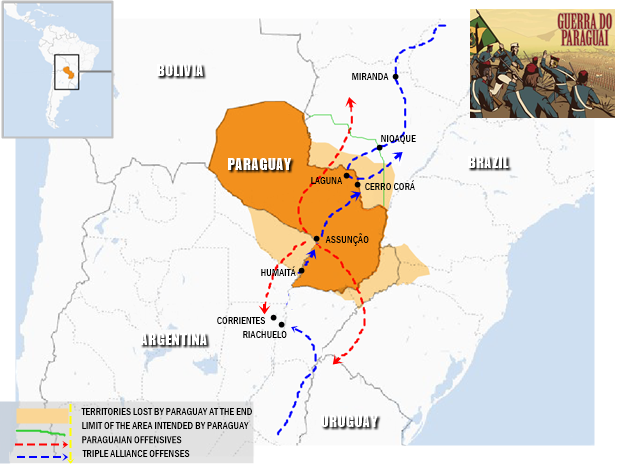
In monarchy, national debate centered on the issue of slavery, with Atlantic slave trade was abandoned in 1850, but only in May 1888, slavery was formally abolished with the approval of the Golden Law; internationally, after the Cisplatine War that resulted in the independence of Uruguay, Brazil won three international wars during the 58-year reign of Pedro II: Platine War, the Uruguayan War and the devastating Paraguayan War, the largest war effort in Brazilian history.
On 15 November 1889 (Republic Day, a national holiday), in disagreement of Imperial Army officers, rural and financial elites, the monarchy was overthrown by a military coup; few days later, the national flag was replaced with the national motto "Ordem e Progresso", influenced by positivism.
EARLY REPUBLIC
The early republican government (until 1930) was nothing more than a military dictatorship, with the army dominating affairs both in Rio de Janeiro and in the states; freedom of the press disappeared and elections were controlled by those in power; internationally, this period maintained a relative balance characterized by a success in resolving border disputes with neighboring countries (for a extraordinary scholarly text on the subject, see De Rezende, Thesis, 2006), only broken by the Acre War (1899–1902) and its involvement in World War I (1914–1918; FEB was the only America Latina military force in World War II).
VARGAS ERA
In Revolution of 1930 the defeated opposition presidential candidate Getúlio Vargas, supported by most of the military, successfully led; supposed to assume power temporarily, Vargas closed down Congress, extinguished the Constitution, ruled with emergency powers and replaced the states' governors with his own supporters. In the 1930s, three failed attempts to remove Vargas and his supporters from power occurred, in 1932, 1935, and in May 1938; the 1937 coup d'état resulted in the cancellation of the 1938 election and formalized Vargas as dictator, beginning the Estado Novo era. Throughout World War II, Brazil remained neutral until August 1942, whaen entered on the allied side. With the Allied victory in 1945 and the end of the fascist regimes in Europe, Vargas's position became unsustainable and he was swiftly overthrown in another military coup, with democracy 'reinstated' by the same army that had ended it 15 years earlier. Vargas committed suicide in August 1954 amid a political crisis, after having returned to power by election in 1950.